

Austrian broadcaster ORF is not wasting any time finding a suitable venue to host the 70th Eurovision Song Contest. A shortlist of three cities is expected by June, and a final decision coming in July.
This marks Austria’s third time hosting the Contest, after Vienna hosted in 1967 and 2015. While Vienna might be the front-runner to host again in 2026, several other cities have thrown their hats in the ring and hope to welcome the glitz and glamour of Eurovision in May 2026.
There is a full list of technical requirements to host the Contest (you can find them in detail here listed on Eurovision World) but the big ones come down to transportation, infrastructure, and hotel capacity.
Before Vienna won the bid to host Eurovision 2015, Innsbruck and Graz were shortlisted, and to be honest, it’s looking like the same cities will be shortlisted to host in 2026.
Until we get the official list from ORF, let’s look at what the Austrian cities expressing an interest to host, have to offer…
Vienna (pop. 2 million)
Venue: Wiener Stadthalle. This is Austria’s most important and largest multifunctional arena. It has room on-site for a concert hall, stage, congress center, and TV studio. The venue has hosted many important international events, including Eurovision 2015, and concerts going back to the 1950s such as The Rolling Stones, The Who, Queen, ABBA, Whitney Houston, Spice Girls, Cher, Kylie Minogue, Beyoncé, and too many others to mention here.

Transportation: Vienna is well linked by rail across Austria and to many major centers across Europe. Vienna International Airport (VIE) provides a direct link to dozens of cities across Europe, and will see fans arrive directly on international flights coming from as far away as Toronto, Delhi, Tokyo, Bangkok, Washington D.C., and Dubai, just to name a few. The airport handled almost 32 million passengers in 2024, that’s about the entire population of Madagascar!
Hotels: Vienna has over 40,000 hotel rooms spread across 433 hotels from luxurious five stars all the way down to rooms that can fit almost any budget!
Innsbruck (pop. 132,200)
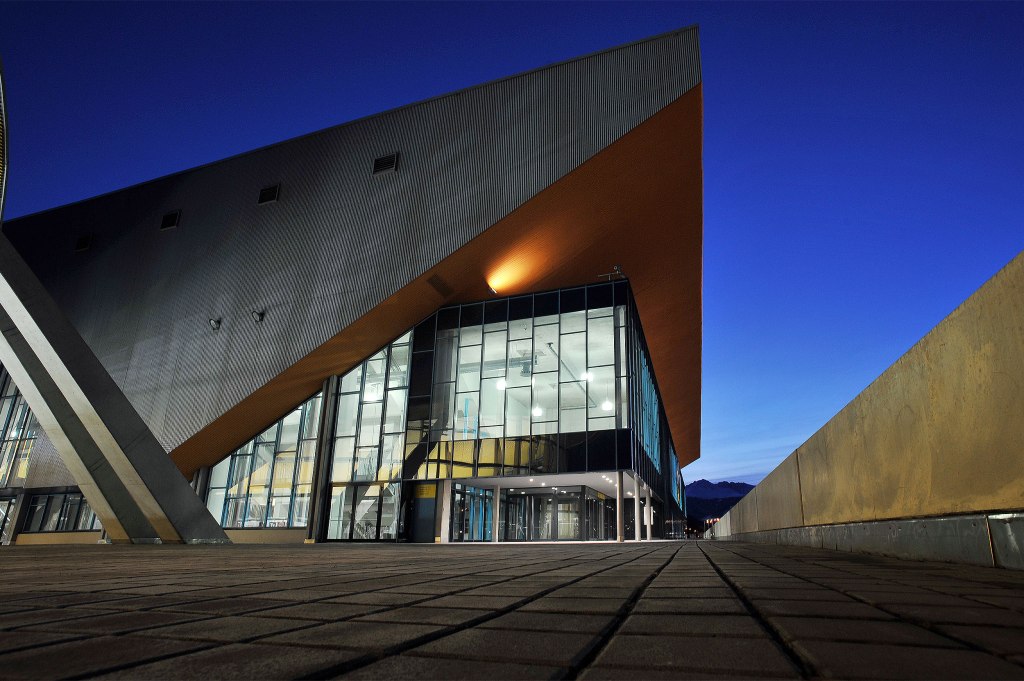
Venue: If any bid has the best chance of beating Vienna, it might be the Olympiahalle in Innsbruck. This arena was built for the 1964 Winter Olympics, but was last renovated in 2005. It has hosted some big concerts over the years, including Iron Maiden, Sting, Rolling Stones, Tina Turner, and Cher, just to name a few. Most recently it hosted the 2024 European Women’s Handball Championship.
Transportation: The airport, though significantly smaller compared to Vienna, does connect to different cities in Europe. Some direct flights include London, Amsterdam, Reykjavík, Warsaw, Copenhagen, Hamburg, Riga, and Athens. Many fans may connect through Munich, which is less than 2 hours away from Innsbruck by train or car.
Hotels: Innsbruck’s tourism website lists around 700 “accommodation providers” in and around the city offering tens of thousands of rooms for visitors. The mayor of Innsbruck is also throwing the full weight of his municipal government behind the bid, vowing to accommodate Eurovision and its requirements in any way possible.
Graz (pop. 306,500)
Venue: Stadthalle Graz. Built in 2002, this space is often used for trade fairs and sporting events. It can hold up to 14,520 standing people, but once a large Eurovision stage is built and some grandstands installed, the capacity would shrink enormously. The last large event hosted here was the European Men’s Handball Championship in 2020.

Second venue: The Schwarzl Freizeit Zentrum has also been floated as a potential venue. It is much smaller than the Stadthalle though, only holding around 5,000 spectators. Although it did accommodate a Shakira concert in 2011!
Transportation: While Graz does have a regional airport, most international fans would need to travel to Vienna first and connect with a flight or train to Graz. GRZ does have direct flights to a few European cities, including Frankfurt, Munich, Berlin, Hamburg, Zürich and İstanbul. If you aren’t flying from one of those cities and find yourself connecting in Vienna, you can drive the 200km to Graz, connect on a flight on Austrian Airways, or take a 2½ hour train from Vienna’s main train station.
Hotels: Graz might struggle to accommodate all fans traveling there for Eurovision. The city has about 70 hotels with a few thousand rooms. For comparison, Basel has 205 hotels with over 18 thousand rooms.
Lins/Wels (combined pop. 275,000)
Venue: The Wels Exhibition Centre is located close to Linz Airport and Wels’ Main Train station. It is a massive site, with both indoor and outdoor exhibition areas. It currently hosts over 200 events per year.

Transportation: Most international fans would need to travel to Vienna and then drive the 180km to Linz or take a 2-hour train from Vienna’s main train station. Linz does have an airport, but it is used mostly for seasonal charter flights. The few year-round flights it does have connect Linz to Frankfurt, Alicante, Bari, and London-Stansted.
Hotels: Hotelchains.com lists just 53 hotels and a few thousand hotel rooms in Linz.
St. Pölten (pop. 58,860)
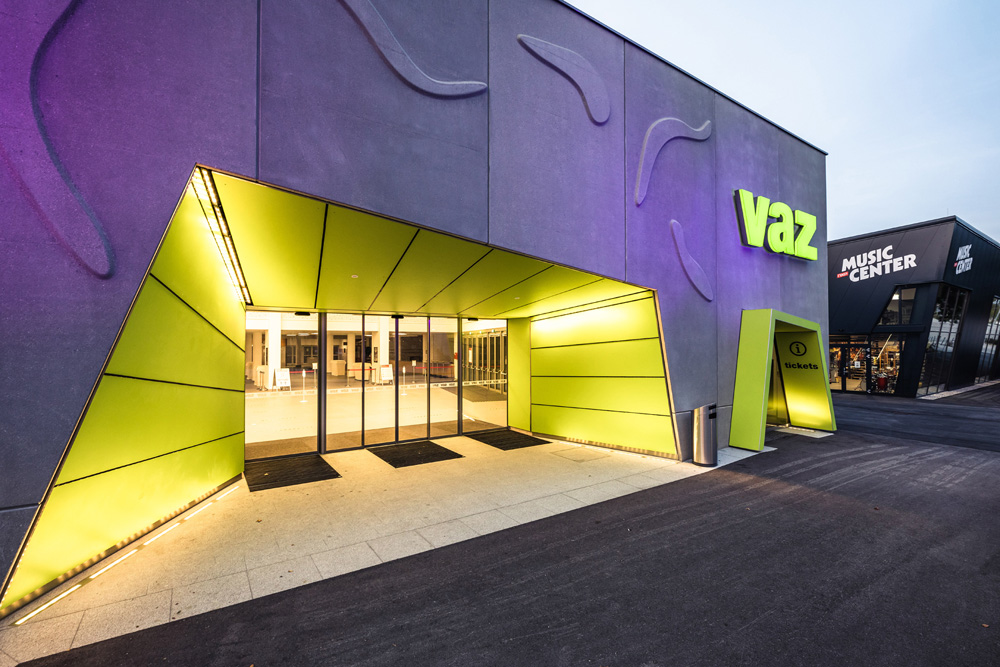
Venue: VAZ St. Pölten. This arena is one of Austria’s largest and most varied event spaces. It comes equipped with multi-functional rooms, several halls of various sizes, and can be configured to host between 10 and 50 thousand people.
Transportation: International fans would need to travel to Vienna and then drive the 63km to St. Pölten or take a 1-hour train from Vienna’s main train station.
Hotels: Booking.com lists “48 hotels and places to stay” in St. Pölten, so some fans would be lucky to find accommodation. However, anywhere suitable would immediately get snatched up by the Eurovision production team and rooms reserved for the artists and national delegations, so not much would be left over for fans trying to book a nice hotel in St. Pölten. Many fans would be forced to find a suitable place to stay in Vienna, or perhaps Linz.
Ebreichsdorf (pop. 11,422)
Venue: Temporary structure to be built
Transportation: International fans would need to travel to Vienna and then drive the 35km to Ebreichsdorf or take a 30-minute train from Vienna’s main train station.
Hotels: Most fans would need to stay in Vienna and commute to Ebreichsdorf, as the town only has four hotels.
Oberwart (pop. 7,500)
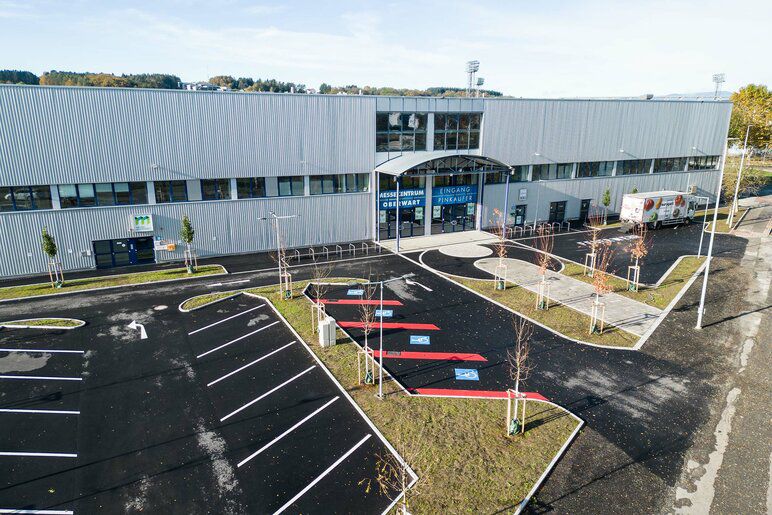
Venue: The Burgenlandhalle (part of the Messezentrum Oberwart) is a multi-purpose event hall. It’s one of the largest indoor venues in the Burgenland region, regularly hosting concerts, TV productions (like Musikantenstadl), trade fairs, and sports events. The hall has a capacity of over 3,000 people and is known for its flexible event space, modern amenities, and good infrastructure, including updated parking and sanitary facilities. It’s a key cultural and event hub in southeastern Austria.
Transportation: International fans would need to travel to Vienna and then drive the 122km to Oberwart or take a 3-4 hour train from Vienna’s main train station or a 2-2½ hour train from Graz.
Hotels: Most fans would need to stay in somewhere near the community (or even as far away as Graz) and commute to Oberwart, as the town only has eight hotels. Oberwart does have a McDonald’s and a trampoline amusement park, so fans wouldn’t be bored in between shows!
Title Photo: OGAE Austria
Let us know in the comments or on social media which city you would like to host the 70th ESC! Follow our social media profiles @buildingbridgespod as we’ll be updating you on the road to Austria 2026!




 Building Bridges Eurovision Podcast - buildingbridgespod.com
Leave a comment